Someday, you won't be here. There will be no more sunrises or sunsets, no more minutes or days. Any problems you might have had will shrivel to irrelevance. All the things you collected, treasured or forgotten, will pass to someone else or end up in the junk heap. It won't matter whether you were beautiful or brilliant. What will matter is what your life meant rippling out in the great story of humanity.
It's the choices you make every day that add up. Money is part of those choices. The word "return" means to come back again. It implies a cycle, like the birds returning every spring. In the same way, when you return money into circulation as an intentional choice to manifest what matters, you get a return of meaning writ large. In the context of the regenerative story of Bioregional Earth, it's a choice between a path that continues to destroy life or a path that stewards the continuation of life.
Will you plant seeds for trees you will never see? The seed metaphor for legacy is one that crosses cultures. Said Indian poet Rabindranath Tagore, "The one who plants the seeds for trees, knowing that he will never sit in their shade, has at least started to understand the meaning of life." A Chinese proverb reminds us that "one generation plants the trees so that another will get their shade." A Greek proverb asserts that "a society grows great when old men plant trees in whose shade they shall never sit."
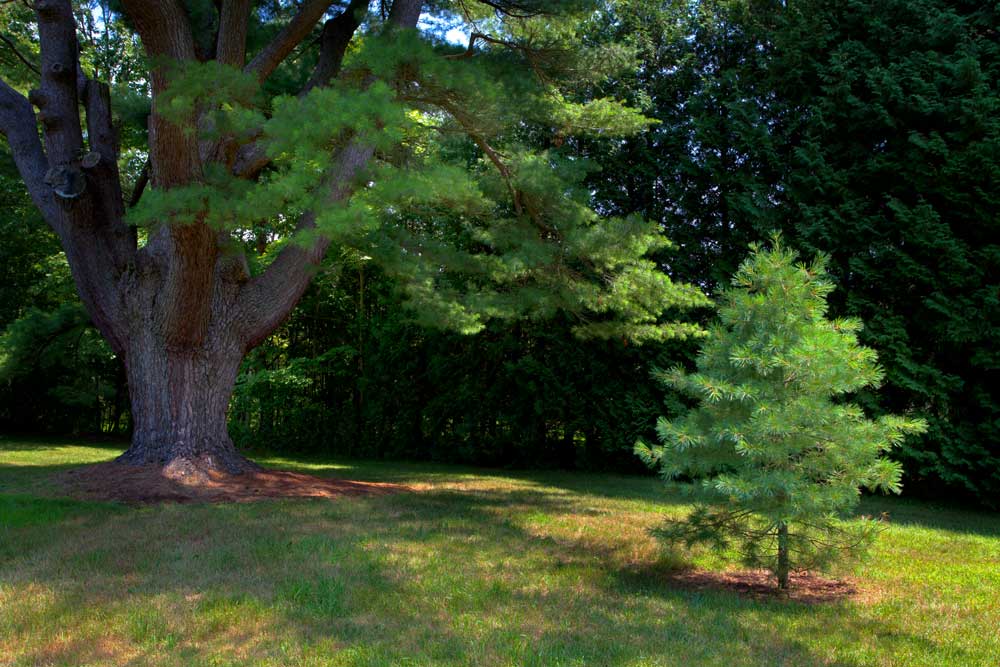
The idea of legacy across generations is as practical as it is philosophical. Where do you think it's best to plant a young tree: a clearing in an old-growth forest or an open field? Ecologists tell us that a young tree grows better when it's planted in an area with older trees. The reason, it seems, is that the roots of the young tree are able to follow the pathways created by former trees and implant themselves more deeply. Over time, the roots of many trees may actually graft themselves to one another, creating an intricate, interdependent foundation hidden under the ground. In this way, stronger trees share resources with weaker ones so that the whole forest becomes healthier. That's legacy: a deep interrelationality across time, with a reliance on those who have come before us and a responsibility to those who come after us. At its worst, legacy is a burden. At its best, legacy is the most profound gift we can give.
In my exploration of Philanthropy for the Real World, the opportunity is clear for philanthropists to take money from the system and step outside of the system in service to life.
We need funding to flow in a big way in this narrow window of opportunity. Private foundations in the US are sitting on $1.5 trillion, with an average of only 6.67% – or $100 billion – disbursed annually. The rest, around $1.1 trillion, is locked away in more than 100,000 tax-exempt foundations. There are billions more sitting unspent in Donor Advised Funds (DAF).
More people are now holding significant wealth. In 2020, at the beginning of the COVID-19 pandemic, there were 615 billionaires in the US with a total combined wealth of $2.9 trillion. In 2026, there are 989 billionaires with a total combined wealth of $7.3 trillion.
And we're in what's been called the greatest wealth transfer in history: nearly $124 trillion in assets is set to change hands through 2048. These generational assets will shape the future, for better or worse. What legacy do today's generations want to create?
Return of Legacy (ROL) is about forging a radically different path for wealth stewardship, one committed to the continuation of life. As we face breakdown on a planetary scale, and desperately search for meaning in a time of uncertainty, there are many who hold some degree of wealth and want to meaningfully redistribute that wealth. We've created a Living Flows approach that offers an ROL through strategic social and ecological regeneration flowing from the local to the global. Beyond just bestowing money, it's about keeping the energy of money alive in a living flow through time.
Individuals and small family foundations may have the most flexibility to think about ROL. There are upwards of 30,000 families globally with $100 million or more in wealth. These families could play a catalytic role in a 21st-century renaissance, in the same way that wealthy Italian families supported the Italian Renaissance. Many have expressed interest in filling this kind of catalytic role in the spirit of ROL.
Legacy is fundamental to what it means to be human. Research shows that without a sense of working to create a legacy, adults lose meaning in their life. Reflecting on legacy offers a glimpse not only into relationships – with each other and the rest of the living world – but also the human spirit.
Tombstones show a person's date of birth and the date of death, with a dash line between them. It's the dash that's important. It's everything you do in between that matters and creates legacy.
The idea of legacy may remind us of death, but it's not about death. Being reminded of death is actually a good thing, because death informs life. It gives you a perspective on what's important. But legacy itself is really about life and living. It helps us decide the kind of life we want to live and the kind of world we want to live in.
The giving and receiving of legacy can evoke, all at once, the entire spectrum of basic human emotions: hope, longing, regret, anxiety, fear, dread, jealousy, bitterness, rage, a sense of failure, a sense of accomplishment, pride, contentment, joy, gratitude, humility, love. When you start thinking about legacy, no matter what your age or state of health, you take stock – of your possessions and money, and also of your accomplishments and disappointments. You take stock of what you've learned from what you've done in the past, what you're doing now, and what you still hope to do. With varying levels of awareness, individuals also inevitably reflect on the people, work, ideas, commitments, and social institutions that have given their lives shape and meaning.
From a purely practical standpoint, if you don't pass on your life experience by leaving a legacy (which manifests in part by how you use your money), the wisdom you've gained through decades of difficult learning will disappear as your physical body wears out. Some people feel almost embarrassed to think about their legacy. It can feel like an "ego trip." It's not. It's a sacred generational responsibility in the story of humanity.
From a psychological perspective, consciously creating a legacy is in part selfish – we want to feel immortal. The idea of leaving something behind that will "live forever" is appealing. We also want to feel like we matter in the vast sea of generations of humanity. But creating a legacy also has an altruistic component. If we don't leave a positive legacy, what kind of world are we creating for future generations?
Norman Cousins was a political journalist and peace advocate. In his writings, he explains that "the tragedy of life is not death, but what we let die inside of us while we live." In a time when much life on our planet is dying (we're in the sixth mass extinction), we can find power by staying alive inside ourselves. Cousins elaborates that "the problem is of the individual who thinks that one person cannot possibly make a difference in the destiny of a society. It's the individual who has no comprehension of the multiplying power of single but sovereign units. It's the problem of seeing yourself in numerical terms rather than historical terms… In short, the main problem is the problem of the individual who takes themselves lightly historically."
"Society is indeed a contract," said Edmund Burke, a British writer and member of Parliament. "It becomes a partnership not only between those who are living, but between those who are living, those who are dead, and those who are to be born." In Indigenous terms, this is seven generation thinking.
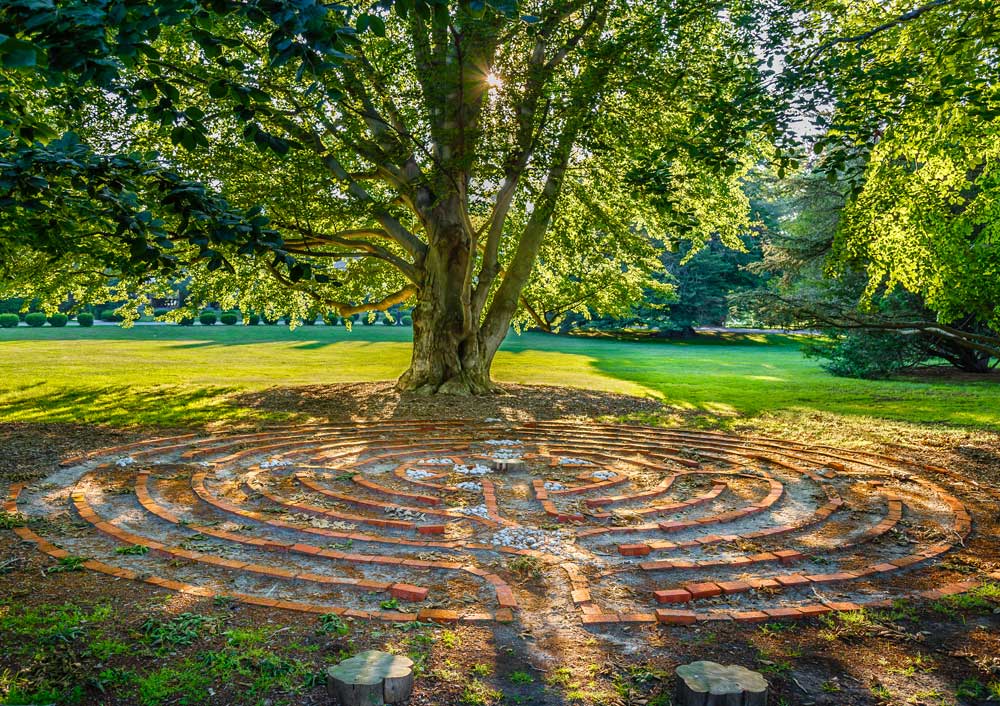
If you don't have some sort of life map, you end up wandering around hopelessly lost. Some people chart their path better than others, but I've found that most people's maps are incomplete and insufficient.
There are actually four dimensions of time that influence us: life time (chronological age); family time (events and roles within the family); social time (cultural expectations); and historical time (socio-cultural era). Each of these shapes our life course.
We're all bound by the basic life course: we're born, we live, we die. It's the human condition. But the four dimensions of time influence our life map. At the beginning, we are what we are given. By mid-life, as we make our way in the world, we come to understand that we can be what we have been given and what we can create. Toward the end of life, we must understand that we must give to others, so that when we leave this world we are what we've been given, what we've created, and what we've passed on – all wrapped up in a legacy bundle.
Paradoxical as it may seem, to believe in youth is to look backward; to look forward, we must believe in age.
— Dorothy Sayers, writer
What's your place in this world – when you're young? as you get older? Do you see yourself as a part of the living web of life? If we see ourselves as part of a bigger story, it changes everything, including how you use your money.
A primary challenge of being a conscious human is living in the present, and making choices about the present, but with the awareness of an uncertain future, especially in this unprecedented moment in human history. No one can survive living simply from moment to moment, denying the future. There has to be a connection to something bigger, a generational rhythm. Living a life is ripples of rhythms, with some things being able to be achieved in a few weeks or months, while others take decades or centuries. You need to get your bearings in eternity.
Choose well. Your choice is brief, and yet endless.
— Johann Wolfgang von Goethe, German polymath and philosopher
We don't live in a culture that thinks much about eternity. Within the sacred Circle of Life as conceived by Indigenous Peoples, different periods of time are set aside for particular purposes. You're expected to recognize the changing of the seasons, to know them as natural progressions in time and to use them to continue in the flow of life. From childhood to young adulthood to older adulthood, the changing seasons of meaning in the Circle of Life are understood with the same certainty that you accept the progression from spring to summer to fall. If people have been shown by example the various stages of life across the years, it's more likely that they will recognize and welcome the whole of their life and see it in the context of the greater whole. Especially as you get older and have accumulated security and wealth, it's part of your role to give what you have in service to the Circle of Life.
ROL (Return of Legacy) is walking your life path by flowing your money, your stories, and your care through time. These three parts make up the whole of rippling legacy energy. Money enables things to happen, to be manifested in the real world. Your stories – especially around who you are, what you value, and why you value it – bring meaning and context for how you put your money into the world. And your care is the heart you offer, your belief that you're doing the right thing even if what comes isn't straightforward, easy, or immediate.
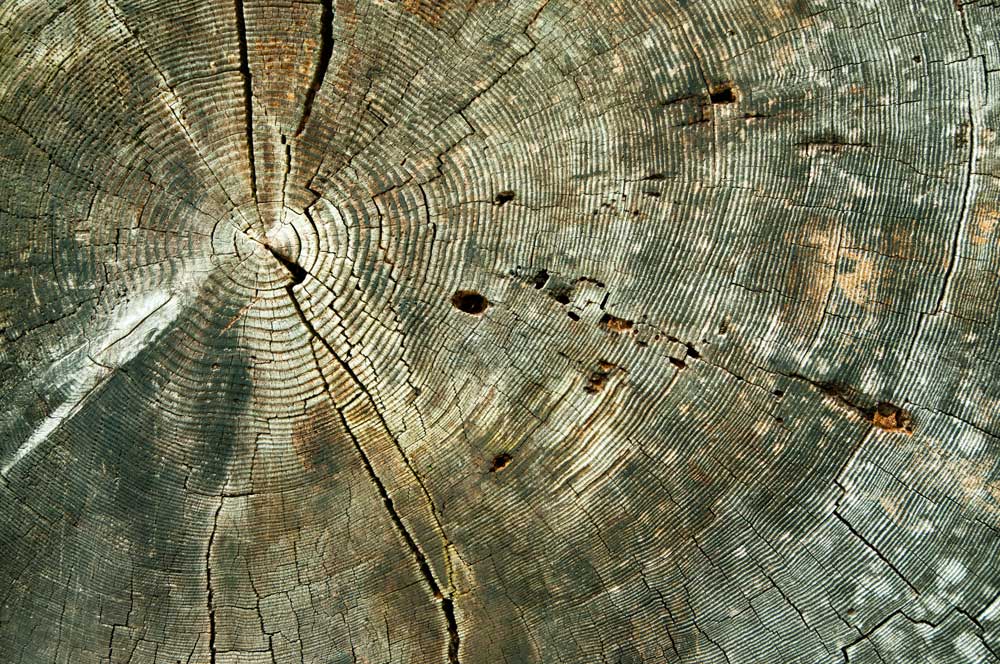
Legacy isn't a short-term enterprise. Expanding our time perspective is a useful way of understanding all kinds of events and issues. It becomes particularly useful when we're trying to understand something as complex as what's going on in the world right now. So many changes are happening, in so many places on the planet, that looking at what's in today's social media feed isn't much help in getting real understanding. It's too much about one sensationalized McMoment after another. A deeper sense of time was more prevalent among ancient peoples. The people of India, for example, could think in terms of kalpas, which consisted of four thousand million years of human reckoning. The Babylonian tradition, later adapted by the Greeks and by medieval Christendom, included the concept of the Great Year, generally used to refer to a 36,000-year cycle, after which history was thought to repeat itself.
On the one hand are such great sweeps of time that individual human events seem insignificant; on the other is such a brief present that it's gone before we know it.
Between these extremes there's a medium range of time, neither too long nor too short for immediate comprehension, which has a personal quality that gives it relevance for the present moment. Social scientist Elise Boulding framed it as the 200-year present. That present begins 100 years ago today, on the day of birth of those among us who are centenarians. Its other boundary is the hundredth birthday of the babies born today. This present is a continuously moving moment, always reaching out 100 years in either direction from the day we're in. We're linked with both boundaries of this moment by the people among us whose life began or will end at one of those boundaries – our own generation; three generations before us (parents, grandparents, great-grandparents); and three generations after us (children, grandchildren, great-grandchildren). This is part of the double meaning in the 7-Generation work I do. The 200-year present is our life space in time, one that we can move around in directly in our own lives and indirectly by touching the human and more-than-human life around us. If you use this to think about the world, it's easier to get a grasp on events that can't be properly understood in terms of what's going on this minute, this month, or this year.
How we respond to the fundamental uncertainty of life in the immenseness of eternity shapes everything we do. It requires wisdom. We also need wisdom, not just capital, to give money away.

Wisdom isn't just for wise people, philosophers, and psychologists. It's for all people and for the future of the world. Wisdom brings together your ability to think, your experience, and your emotional maturity to make good decisions at a personal and societal level.
Generally, wise people tend to project the consequences of a decision far into the future: "I will plant seeds to grow in springs I will not see." To be wise is to have an orientation in time that examines the past for relevant knowledge, experience, and precedent; that understands the present contexts of any situation or challenge to be addressed; and that projects into the future the possible long-term effects.
Paul Baltes of the Max Planck Institute in Berlin spent his life investigating wisdom. He defined wisdom as "a state of knowledge about the human condition, about how it comes about, which factors shape it, how one deals with difficult situations, and how one organizes one's life in such a manner that when we are old, we judge it to be meaningful."
The essence of wisdom is in knowing what you don't know, in the appreciation that knowledge is fallible. It's the balance between knowing and doubting. "Wise" action involves the way in which you hold knowledge and put it to use. A "wise" decision tries to understand the ultimate consequences of actions in a holistic, systemic way.
The test of a first-rate intelligence is the ability to hold two opposed ideas in mind at the same time and still retain the ability to function.
— F. Scott Fitzgerald, writer
The "wiser" we become, the more paradox we find. And yet we must continue to live in this world and make our way through this paradox. One of the purposes of our Dandelion Strategy (part of Living Flows) is to recognize what we don't know we don't know – and still move forward with wisdom.
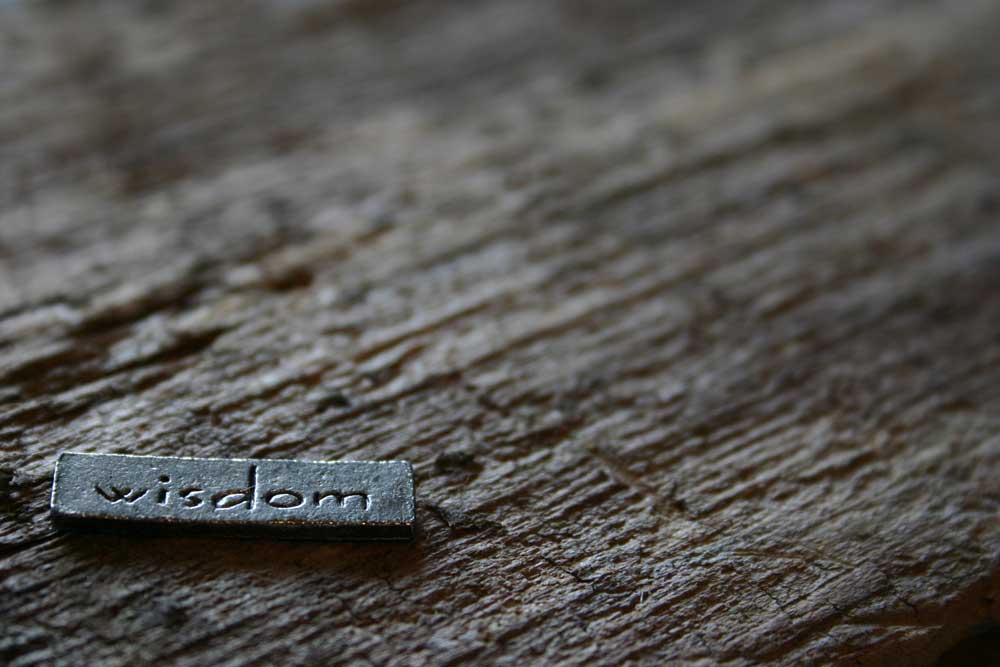
Being wise in our life, which includes what we do with our money, is about pushing beyond just knowledge. "We are drowning in information, while starving for wisdom," observed biologist and ecological thinker E.O. Wilson. Philanthropists think they need more "due diligence" and more "measures and metrics" to make sure their money is "making an impact." What we really need is to be more philosophical to find our wisdom.
Wolf Tivy, an engineer by training who lived by numbers, quit his job to become an author and editor. He discovered that "if all you end up doing is nursing your money, without ever exercising the authority to decide on which future it shall be spent, it might as well be someone else's. People miss that escaping this meaningless servitude to our own capital was Thoreau's main point in Walden. You don't actually need the money; in reality, the money needs you to give it a worthy purpose. But everyone gets this backward." He goes on to say, "One of the most important jobs of the philosopher in society is to remind us – and help create a narrative – of the intrinsic [value] of the higher pursuits. This is the most difficult and least reliable of our perspective transformations, because it's not a matter of practicality, but of self-reflection and self-transformation. It is no less compelling, but requires more philosophical imagination."
Indigenous Peoples emphasize wisdom-in-action as a fundamental human goal: to become wiser in living properly in the world (i.e. in right relationship with ourselves, each other, and the living planet). Our first relationship is with the land. Rather than looking at merely accumulating abstracted knowledge, wisdom-in-action is a grounded, holistic, relational journey focused on living in harmony with all living systems. Wisdom is intimately related to the land around us, which provides a blueprint of how to live well and all that is necessary to sustain life. To understand the living planet is to live in harmony with life, not to dominate any part of life. Domination disturbs the balance among relationships. So wisdom-in-action is a search for a balance among a web of relationships in space and time.
The myth is not situated on a definitive date, but on a 'once upon a time,' a knot in which space and time are intertwined. The myth is a past that is also a future.
— Octavio Paz, Nobel-winning poet
ROL enables us to enact wisdom through the story of Bioregional Earth that's both intensely human in the current moment of your life and timelessly mythic in the context of lifetimes across generations.
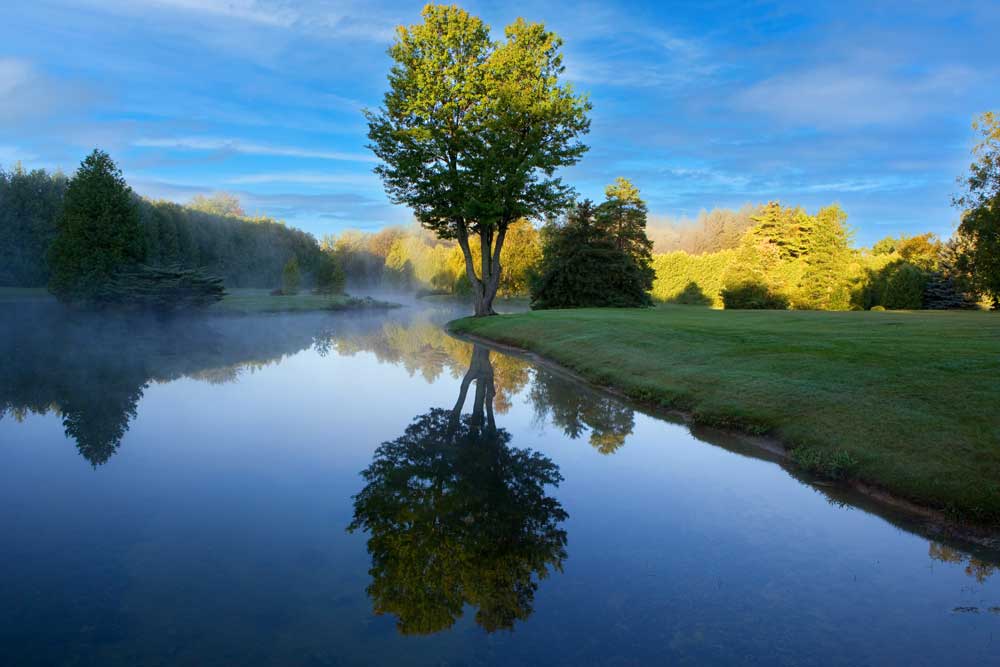
In order to reflect, think and plan, you must quiet yourself. You can't see your reflection in churning waters. Water must be still to see your reflection.
— Karen Hantze Susman, trailblazing female tennis player
There are three basic kinds of questions in life: What is it? and What are we going to do about it? and What does it mean? The last question is the most difficult.
Meaning is a notoriously vague concept. Yet the very nature of being human means we venture into the web of what meaning is to try to understand ourselves and our life. We want it all to "make sense." Some may say these "big" questions are just too heavy. It's better to just forget about them and live your life. The problem is that we'll all eventually face moments of desperation in which we must deal with the big questions and extreme emotional pain – moments when we look into the mirror and don't recognize ourselves, times of personal loss, or horrible world events that seem incomprehensible.
Communication scholar W. Barnett Pearce put it this way: "Human beings are confronted with certain 'facts of life.' We are born, we mature, and then we die. While alive, we eat, excrete, and interact with our fellows. And we invest all of these 'facts' with meaning by placing them within stories. Making 'meaning' is not an optional activity in which persons sometimes engage; it is part of what it means to be a human being."
In other words, we are fundamentally meaning-making creatures, meaning is what you make it, and meaning takes shape in the stories you create about life, yours in particular. Meaning also involves a paradox: at one and the same time it's about living and thinking about living.
It did not really matter what we expected from life, but rather what life expected from us. We needed to stop asking about the meaning of life, and instead to think of ourselves as those who were being questioned by life – daily and hourly. Our answer must consist, not in talk and meditation, but in right action and in right conduct. Life ultimately means taking responsibility.
― Viktor E. Frankl, Austrian psychiatrist and Holocaust survivor
In a time where there are growing questions about our destructive actions, alienation, and complexity, we wonder where we can find meaning. The idea that we can derive meaning from connections across generations, grounded in legacy, is an attractive option.
ROL isn't about having, receiving, or offering hope. It's about clear sightedness around the role your money can play.
People use the word hope in many ways. You might think of the three virtues – faith, hope, and charity. Used in this sense, hope is a quality that imbues a certain grace in the face of adversity. We say we have "high hopes." We "hope" something will or will not happen. We say we're "hopeful" about the future. When we use the word "hope" in these ways, it's synonymous with saying "want" or "expectation." What we're really saying is, "I want something to turn out the way I would like." Hope ends up denoting a rather passive, "wait and see attitude." At best, it isn't an active process used to reach objectives. At worst, it's a palliative drug that becomes an obstacle to action.
Everyone seems to feel they need to "be hopeful," especially if money and legacy are involved. Hope has become the most socially acceptable form of gaslighting. "When young people look ahead and see a future that looks suspiciously like a series of compounding emergencies, the official response remains identical: do not despair, have hope… [But] hope may not be what young people need. They may need something considerably more honest… Instead of facing the magnitude of the crisis, we soften it. Instead of reckoning with the absurdity of our political and ecological condition, we anesthetize ourselves with phrases about progress, resilience, innovation, and better futures just around the corner. Hope, in this form, becomes a way of not fully seeing… Hope and despair are roommates, not rivals. Both are obsessed with futures, both are useless in the present, both give you an excellent excuse to not do the hard thing right now. The hope-despair binary is not a spectrum. It is a cul-de-sac… Hope promises transformation while quietly declining to engage with any of the structural logic driving ecological destruction. It is the rhetoric of maintaining the machine while repainting it green. Hope, here, acts as a lubricant for denial. It allows institutions to celebrate ambition in press releases while avoiding the implications of planetary limits in boardrooms… The alternative is something both simpler and considerably more demanding… learning to act without the guarantee of success. To remain ethically and politically awake without requiring the narcotic of optimism as a precondition."
Action without a guarantee of immediate success or impact. That's the essence of ROL – a clear-eyed pragmatism. You act in a certain way with your money because reality demands that response as your sacred responsibility. Instead of just a feel-good moment, you live with ethical clarity. And when people ask what you did when you knew what was happening, you can answer with a clear conscience: you did what matters.
Czech statesman, dissident, and poet Václav Havel said that hope isn't the conviction that everything will be all right, but the belief that you're doing the right thing.
So hope becomes more active and radical, beyond what we normally think of hope.
Joanna Macy, ecophilosopher and scholar, called it active hope. The active hope you need for ROL is, in Macy's words, "not wishful thinking. It's waking up to the beauty of life on whose behalf we can act. We belong to this world. The web of life is calling us forth at this time. We've come a long way and are here to play our part… First, we take a clear view of reality; second, we identify what we hope for in terms of the direction we'd like things to move in or the values we'd like to see expressed; and third, we take steps to move ourselves or the situation in that direction."
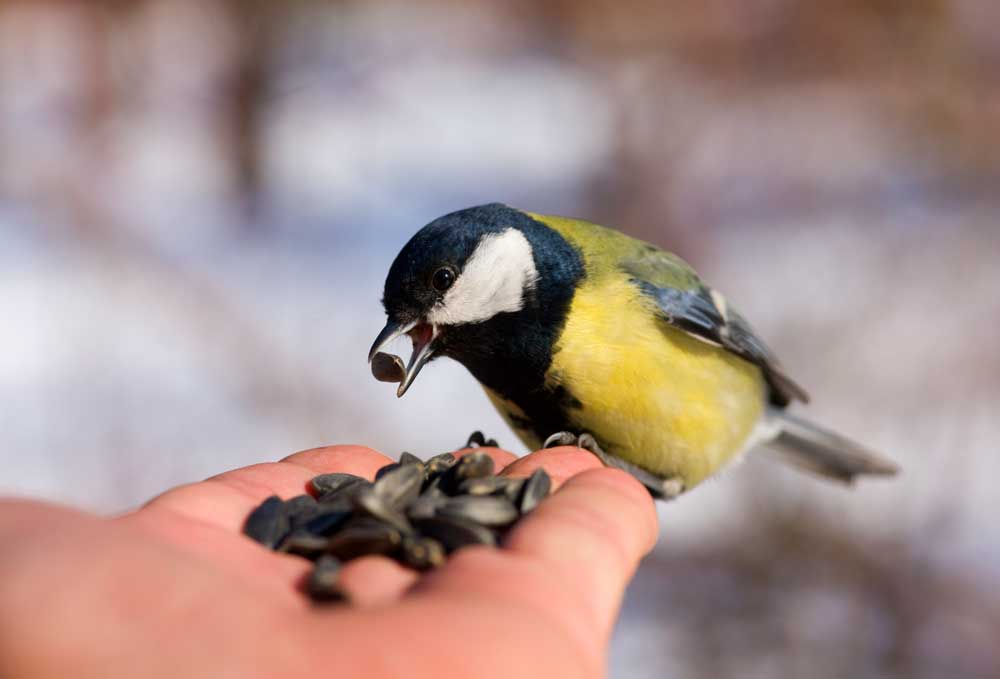
Philosopher Jonathan Lear explores the concept of radical hope. As Western society feels the fear of an unpredictable and chaotic future, Indigenous Peoples understand apocalypse not as an approaching event but as an ongoing condition. For their cultures, the "end of the world" has already happened. So what does "hope" look like in that context? Lear considers the case of the Crow tribe: "After the coming of the white man and the passing of the buffalo, 'nothing happened.' That is, when the Crow way of life collapsed. The Crow people could no longer find meaning for individual acts and occurrences within a rich web of shared signification, values, and goals. The Crow had survived, but they did not live as Crow had lived… Yet Chief Plenty Coups was able to articulate a meaningful and even hopeful way forward… [following the ways of] the Chickadee. He is least in strength, but strongest of mind among his kind. He is willing to work for wisdom… to listen."
In listening, you come to internalize ethical ideals that enable you to use your money to create an ROL. You can feel your part in the bigger story of lifetimes across generations on a living planet.
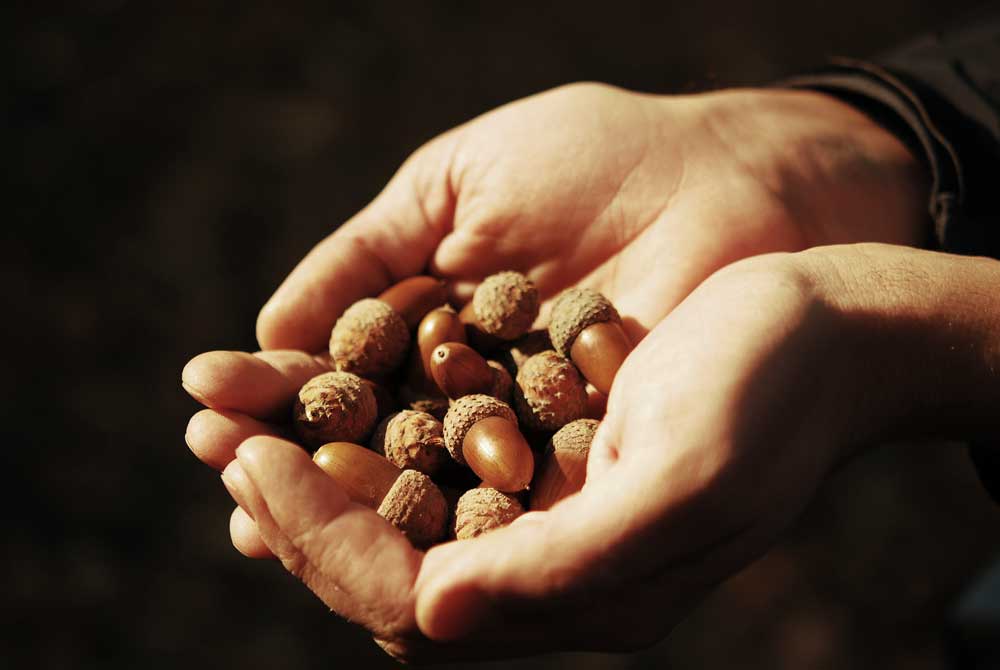
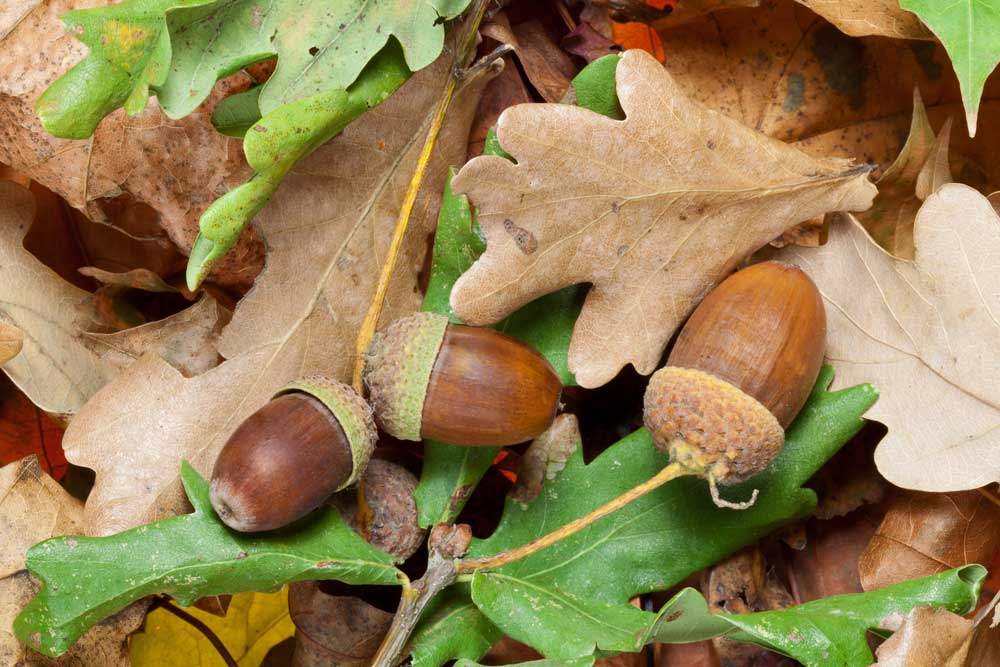
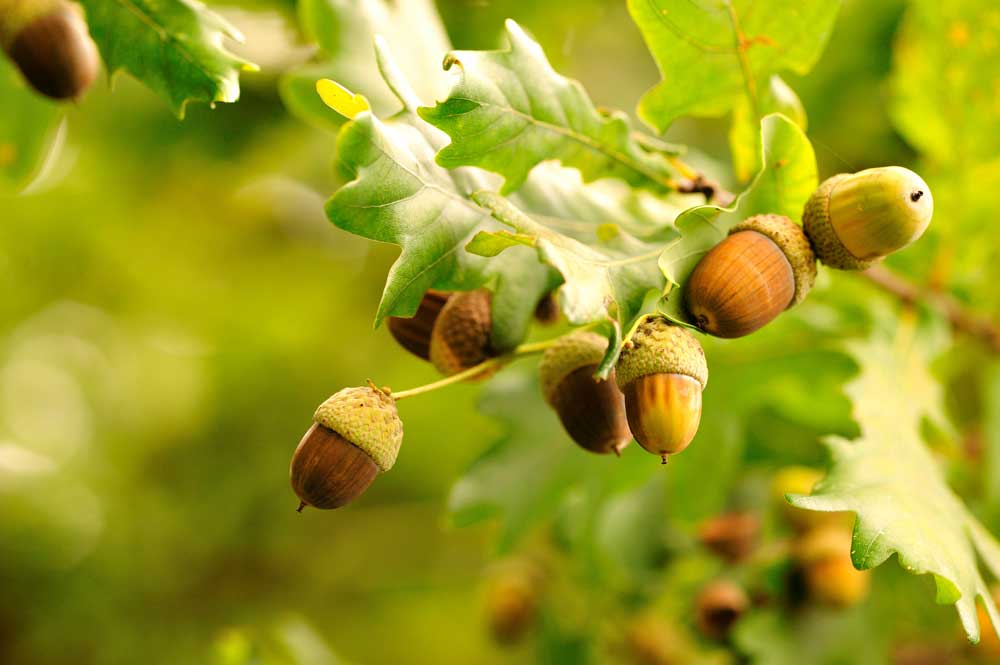
Is a handful of coins worth more than a handful of acorns? It depends whether or not you're using the perspective of ROL.
Keep in mind that money isn't a hard asset, but basically just a floating promise that humans created. Money holds value purely because we, collectively, agree it does. It may be worth nothing tomorrow, as the global financial system becomes increasingly unstable. In this moment, it makes sense to do something worthwhile with money while it's still worth something.
They say that money makes the world go around. An Earth System scientist will give you a wholly different explanation of Earth's rotation related to the momentum left over from the formation of our solar system 4.6 billion years ago. That's what's real – and money should be in service to what's real.
From an Indigenous perspective, living our life is about being in right relationship (with self, others, the land) within Natural Law for a good life. Natural Law is derived from fundamental experiences and observations of the natural world. It offers and explains the relationships, responsibilities, and obligations that all forms of life have to one another. How we use our money should be in keeping with those relationships, responsibilities, and obligations.
There's so much trauma around money in Western culture, and so many harmful extractive and individualistic patterns. ROL is an opportunity to shift that story, to bring the right intention and spirit. Moving wealth wisely in this time is a transformative act.
We can start to see that money is a how, not a what. Money carries our intention. It's how we can live out right relationship. If we use it with integrity, it carries integrity forward.
Money isn't a thing. It's a practice – a practice that precedes and exceeds the "thing" we identify as "money." Giving doesn't happen in a vacuum. Giving depends on worlds, reinforces worlds, and creates worlds. That's the living power of ROL.
Instead of carrying trauma and drama, giving money in the context of ROL can bring healing and health. It feels different. It's grounded and coherent. It touches ancestors, future generations, and the other-than-human world. The Living Flows approach enables you to fund not just trees (isolated projects), but the forest (a portfolio of activities in a strategic long-term framework). In other words, you bring energy to the whole system, with everything in relationship with everything else, scale-linking from the local to the global. This is a very different way of funding – and being.
Money is like water. It can be a conduit for commitment, a currency of love. Money moving in the direction of our highest commitments nourishes our world and ourselves. What you appreciate appreciates. When you make a difference with what you have, it expands. True abundance flows from enough; never from more… Know the flow – take responsibility for the way your money moves in the world. Let your soul inform your money and your money express your soul.
― Lynne Twist, Co-Founder of Pachamama Alliance
What if we measured wealth by how much we give away in the context of right relationship? Humans are social creatures, so relationship matters and, in fact, creates the context for meaning.
There are some taking steps toward thinking in this way. Randall Lane, Chief Content Officer at Forbes, recently debuted the "True Net Worth" list. True Net Worth combines an individual's standard net worth with the total amount of money they've donated.
Ted Turner, who recently passed away, dared fellow billionaires to give more back in the 1990s. The brash media mogul's $1 billion pledge to the United Nations in 1997 helped usher in the age of the mega-donor. Turner had a hand in the creation of what would eventually become the Philanthropy 50. In 1996, he proposed ranking the richest Americans not by their wealth but by their giving. He said at the time that he thought it would spur more philanthropy. He commented, "The new super-rich won't loosen up their wads because they're afraid they'll reduce their net worth and go down on the [Forbes 400] list."
Turner also said that one of the reasons he started his foundation was to get his children involved in philanthropy. All five serve on the foundation's Board of Directors, as do several of his grandchildren. There is a deeply personal legacy thread here. Turner had a difficult relationship with his own father, an alcoholic who often beat him. But he credited his father with teaching him about the importance of charitable giving: "Not only did he make contributions to causes that he cared about, he also supported the tuition of two African American students at his alma mater, Millsaps College, in the late 1950s. It made a big impression on me to see someone as hard-charging as my father take the time to quietly help out two young people like this. Looking back, if I had to live my life over, there are things I would do differently – but the one thing I would not change is my charitable giving."
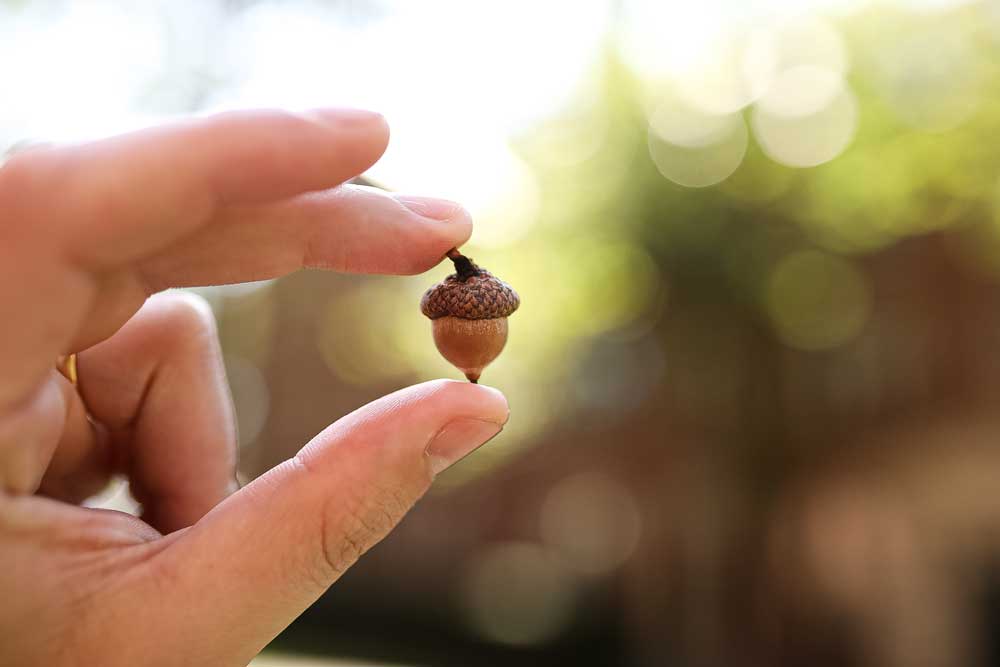
In the financial world, few metrics are as central as ROI: Return on Investment. It's about profit. It's about making more money using your money. Return of Legacy (ROL) is a different path for wealth stewardship, beyond simple financial gain. The question moves from "What will my money do for me?" to "What will my money do because of me?" You shift from making money to making money meaningful.
The big challenge of this moment in human history is social and ecological regeneration, to get back into balance with life itself for ecopsychosocial wellbeing. Ecology and economy share the same ancient Greek root, oikos, meaning household or home. Unfortunately, one is destroying our home while the other struggles to maintain it. Our planet is our home writ large, and we need to steward it properly. There can be no sustainable ecological equilibrium in an economically badly managed world. Philanthropic giving needs to be grounded in the question what should we be investing in life?
When you start talking about giving away money, it can feel abstract, analytical, and lifeless. ROL brings life back into the equation. Because the truth is that legacy is really about aligning money with meaning as a person lives their life. People are craving that realignment. Studies consistently show that people who feel personally connected to their giving and the benefit it can offer future generations are more likely to be more generous over a longer time period.
Philanthropy has the power to step out of current financial expectations into Living Flows – it has the freedom to dismiss ROI in favor of ROL. ROL is about moving from transactional to relational. It unlocks identity, connection, meaning, and spirit. It brings money alive, flowing it out of the existing broken system, and gifting it into a life-affirming future.
Money needs to start flowing and circulating. There's more money in the world right now than ever before. It's concentrated, it's difficult to access, but it's there. It needs to flow in right relationship. The Indigenous Systems Knowledge Collective offers a distinct understanding of wealth and philanthropy. Indigenous economies aren't growth-based, but increase-based, always diversifying to maintain systems that are anti-fragile, abundant and stable, yet responsive to change. In a traditional approach to sharing resources, every interaction must meet two conditions. Money and knowledge may only be transferred if:
ROL isn't about settling accounts. It's about being in relationship and sustaining life together. If we change the context in which we give, we can lay the foundation for economies that prioritize connection and responsibility over competition and extraction.
Traditional philanthropy asked, how do we reduce damage and pain? ROL is asking something far more demanding: How can you participate in processes that increase life's capacity to regenerate? We are dreaming new possibilities into being.
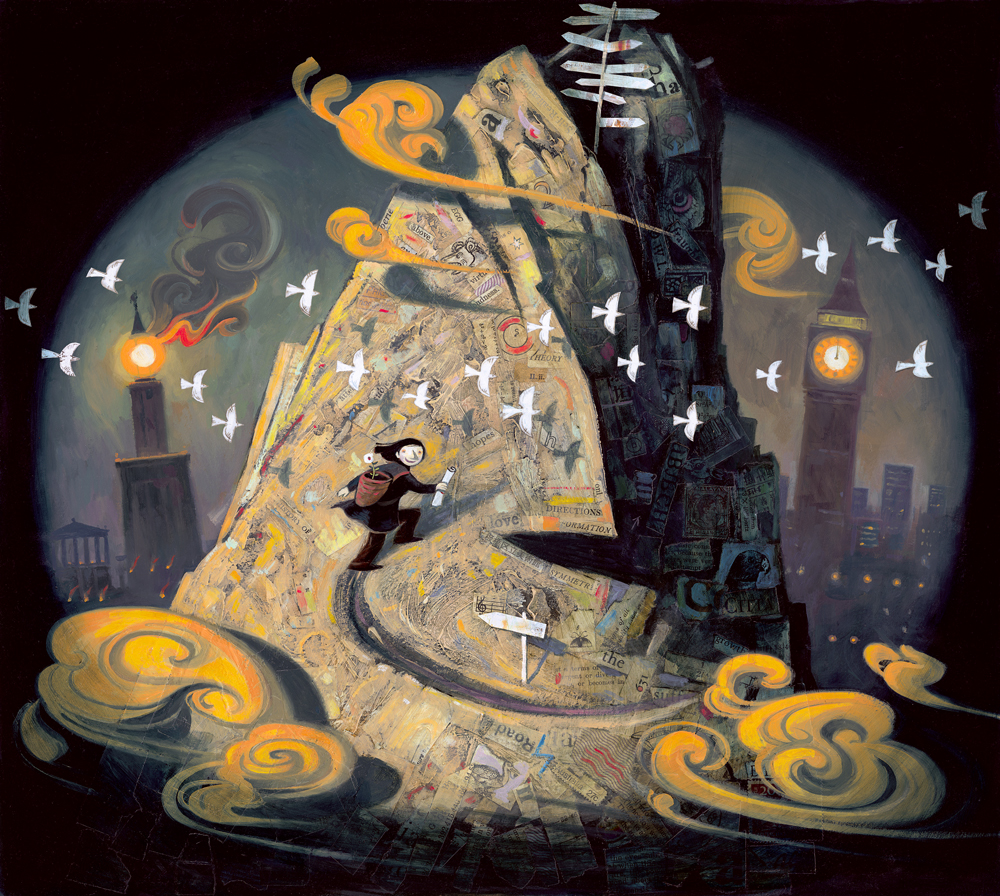
A dream is the front end of a legacy.
This is the Legacy Project's signature image, by Academy Award-winning artist Shaun Tan. It's called Climbing the Mountain of Life, part of the award-winning bestseller for all ages, Dream: A Tale of Wonder, Wisdom & Wishes. The girl in the image represents you, forging your own life path up the mountain – your life story in the context of bigger hi-story, with the ancient Lighthouse of Alexandria on one side and the modern image of Big Ben on the other. The mountain's collage texture is made up of bits of maps, symbols, and text in different languages, suggesting culture, history, learning, and experience. You think the path up the mountain is straightforward (simple signpost), while hidden ahead are more complex choices (multiple sign directions). The girl in the image carries a scroll in her hand, perhaps a map or diploma suggesting wayfinding or learning, and a small flowering plant in her knapsack, ready to be planted in her life place on the planet. Her smiling face (eyes, nose, and mouth) is echoed in the landscape (path is the smile, outcrop on mountain is the nose, light sources are the eyes), showing that we are a part of the world and the world is a part of us. She watches the birds above, symbolizing her dreams, while the trail she leaves behind her is the trail we all leave behind us every day – her legacy.
The story in Dream culminates on the green pages with a life-giving Dream Tree, because "the world at its best is green… the color of Go and the color of Grow." Green is, of course, also the color of money. Money needs you to give it a worthy purpose.
What do you want your legacy to be? That's not an idle question, especially in this global moment. Right now, it makes sense to do something worthwhile with your money while it's still worth something.
ROL can be life changing – for you and for all life across generations. It's about staying alive inside yourself and living a meaningful life that ripples through time. You start by taking an unblinking look at reality, you identify the values you want to express in right relationship, and you take a step in that direction. One step after another, up the mountain of life, in service to life.
ROL is walking your life path by flowing your money, your stories, and your care through time. We offer you a way to do that. You can follow The Design Pathway for Regenerating Earth, the biggest human undertaking our species has ever attempted. Bring the energy of your money to Living Flows as we forge a radically different path for wealth stewardship. The regenerative story of Bioregional Earth is about walking a grounded path, a path I myself am walking as Co-Steward of Bioregional Earth and as part of the Core Team for the Greater Tkaronto Bioregion.
We are connected by the legacies passed down from those who came before us and the legacies we pass down to those who come after us. The story of Bioregional Earth will not be realized in the lifetime of anyone reading this right now. This is work over centuries. It's a story we must pass down across generations. This is the legacy project of our time.
Explore more as part of our upcoming invitation-only webinar series Living Philanthropy. The series is specifically for wealth holders and stewards/advisors, philanthropic foundation staff and advisors, board trustees, and family office professionals. We're also available for one-on-one guidance on how to flow wealth in a way that matters. Reach out to us at the Legacy Project if you're interested and to find out more.