
How can we weave insights about the way life works on our dynamic, living planet so that we can actively collaborate with the naturally occurring processes of regeneration that exist across different scales? With my background in Earth System Science and on-the-ground work with regenerative finance, this is a question I've explored over many years, including in over 30 webinar recordings. My thinking has evolved into a Living Flows approach for organizing regenerative work locally within a strategic global framework, and then effectively flowing funding into and through the work. Dandelion and Ripple are the two complementary strategies of Living Flows, each moving across fractal planetary scales from different directions.
The Earth itself can be a muse, model, and mentor in helping us find our way back into balance with life itself – to live into the story of Bioregional Earth and ecopsychosocial wellbeing. Let's ground ourselves.
If we want to create a regenerative economy, we should study the only real example we have: the biosphere of Earth. The Earth is a system of systems. Like the human body, Earth is comprised of diverse parts that interact in complex and interconnected ways. For example, heat absorbed by the ocean is transported by ocean currents. This energy is constantly released into Earth's atmosphere. Heat and moisture from the ocean and land influence Earth's weather patterns. Moisture in the atmosphere forms clouds and precipitation. Precipitation significantly impacts water availability, which influences soil moisture and ocean salinity.
The living flows of Earth's relationships have sustained healthy forms of economic exchange for more than 3.5 billion years. They exist thanks to a very special configuration of life-giving processes. As we design the architecture of funding ecosystems, we can integrate these processes directly.
Keep in mind that an economy is essentially a large, interconnected system of resource exchange. Traditional human economies are subsystems of the Earth "economy" and are entirely dependent on natural resources and processes – such as clean air, water filtration, crop pollination, and climate regulation – to function and survive. A regenerative economy needs to move beyond basic sustainability by actively regenerating ecosystems and, instead of continuing to extract value, come back into balance with life itself. We can talk about a regenerative economy as being in right relationship with life. There are fractal scales of right relationship in Earth systems, going all the way up to the right relationship between the Earth and the Sun, which is why we have life on this planet.
I want to explore a few examples of Earth System processes: Radiation from the Sun; Earth's Rotation; Seasonality through Earth's Orbit; Existence of Water in All Forms; Ocean Circulation; Weather Systems; Plate Tectonics; Weathering on Land; Small Water Cycles; and River Systems.
This isn't an exhaustive list. The point is to highlight some foundational patterns so that we can illuminate a design process for regenerative economy. We need to understand the basic ways that Earth continually regenerates herself to see how the biosphere exists as an emergent phenomenon that integrates all the above elements.
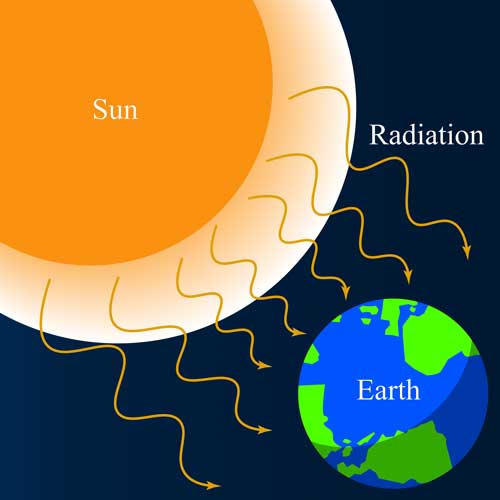
Radiation from the Sun
Life is dynamic. Thermodynamics tells us that all physical systems seek equilibrium in closed form. Biological systems survive as open thermodynamic systems, constantly in flow. The Sun is the primary engine for Earth's systems. It continually bombards the Earth's surface with radiation that heats land, water, and air, and drives flows. It's also the source of food through photosynthesis that's the basis of our global food web.
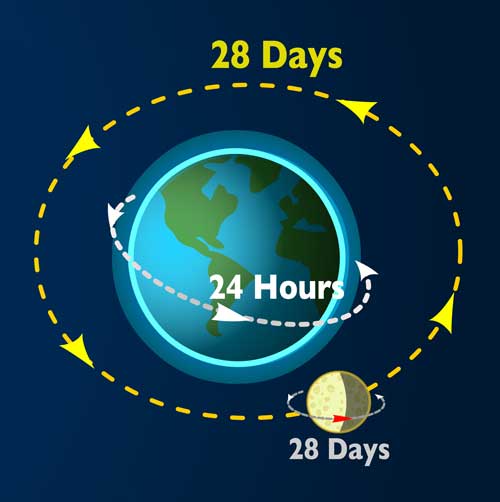
Earth's Rotation
When our planet formed, it was part of a spiraling mass that gave rise to our Solar System. Due to the Sun's gravity, the Earth has remained in orbit around the Sun ever since it was born. Its rotational inertia was altered by a collision that created the Moon while also reconstituting the Earth from the debris. Now there's energy from the rotation of Earth that creates flows of winds in the atmosphere, tidal forces in the ocean from the Moon's proximity, and the Coriolis force that continually stirs the World Ocean.
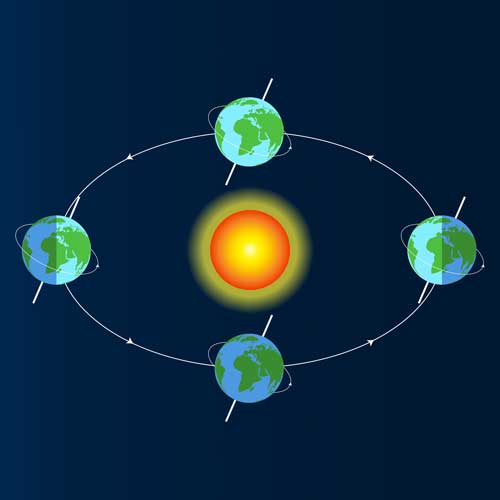
Seasonality through Earth's Orbit
Throughout a year, Earth's tilted axis causes the seasons as different parts of Earth receive the Sun's most direct rays (i.e. when the North Pole tilts toward the Sun, it's summer in the Northern Hemisphere; when the South Pole tilts toward the Sun, it's winter in the Northern Hemisphere). There's also a continual wobble of Earth on its axis, fluctuation of stretching and contracting for the shape of its orbit around the Sun, and an oscillation into and out of the orbital plane. This creates continual changes in how sunlight distributes across Earth's surface, changing how energy moves into the ocean, over land, and in the atmosphere. Over a 26,000-year cycle, this gradual shifting drives climate fluctuations and alters the dates we experience solstices. It also plays a role in the evolution of ecosystems and their distributions across the planet.
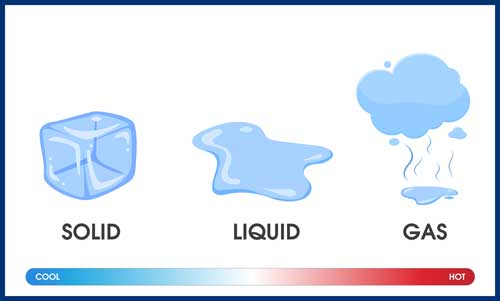
Existence of Water in All Forms
Water is life. Anyone who studies the origins of life in the Universe knows you need water at the surface of a planet if you want life to emerge at all. Perhaps less known is the fact that you need water to take all its states – solid, liquid, and gas – because each phase of matter contributes to conversion of energy and movements of minerals that living organisms need in their bodies. Living flows include ice to crush and cut through rock, gas to form weather patterns, and liquid to circulate and flow.
Ocean Circulation
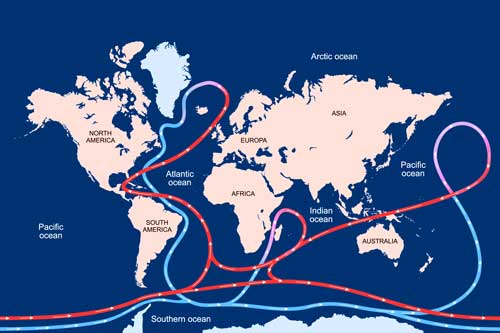
Earth's single, interconnected body of salt water, the World Ocean, covers roughly 71% of the planet's surface. While geographically it acts as one system, it's traditionally divided into five primary regions: the Pacific, Atlantic, Indian, Southern, and Arctic oceans. Energy from the Sun is distributed unevenly across Earth's surface. This, together with the rotation of Earth, causes the World Ocean to continually stir and mix itself – pumping huge amounts of energy from the equator to the poles, and transporting immense quantities of minerals around the planet. This gives rise to plankton populations, different rates of evaporation, regional climate effects, and much more that continually replenishes life on Earth.
Weather Systems
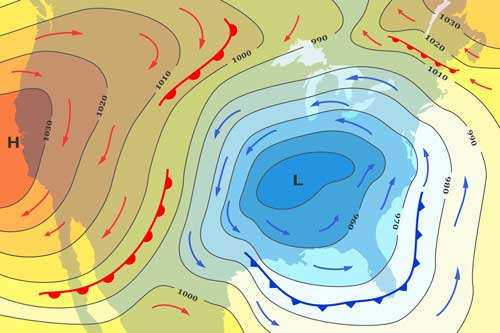
In a similar fashion, there's continual circulation of air masses in the atmosphere. Water drives most of the energy exchanges by continually changing form – vapor condensing into clouds and falling as precipitation, air rising high enough that water freezes into ice crystals, and so forth. These dynamics drive the weather, create jet streams that push high- and low-pressure systems around, and have profound consequences on the ecology that can exist both on land and in the sea.
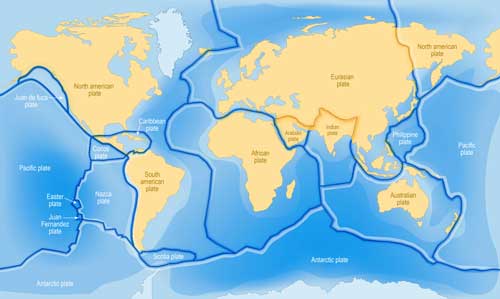
Plate Tectonics
The strongest driver of change over long periods of time is the carbon cycle. The fast carbon cycle operates on biological timescales (days to decades) and primarily involves the continuous exchange of carbon through the biosphere (i.e. photosynthesis, respiration and decomposition). The slow carbon cycle occurs over hundreds of millions of years and involves the movement of carbon through the geosphere. Tectonic plates move over Earth's surface and carry carbon-rich rocks deep underground, where extreme heat and pressure can eventually transform them into fossil fuels (e.g. coal, oil, natural gas). Convective mixing of magma deep below the surface and earthquakes, volcanoes, and steam vents continually bring melted rocks and gases up from the depths. Mountains and other large geologic features enable carbon to cycle and transform everywhere that it encounters living beings.
Weathering on Land
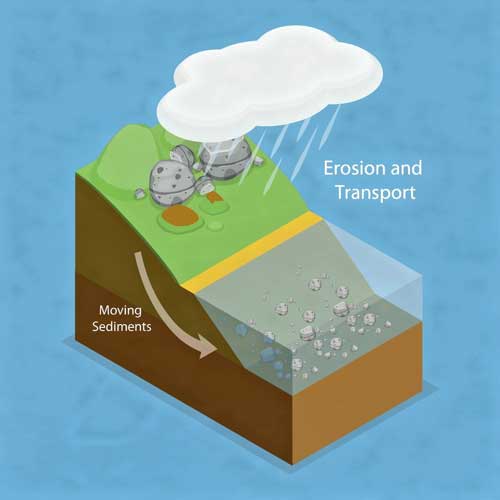
As we start to combine different processes, we see how regeneration works at large scales. Ocean circulation together with movements of air give rise to local weather patterns. Geologic processes cause mountains to rise. Wind and water erosion cause weathering that releases vital nutrients. Rivers and streams carry these nutrients into valleys and plains to continually renew the soils. Regeneration occurs in hydrological systems, landscape processes, geologic forces, and among the living ecosystems themselves.
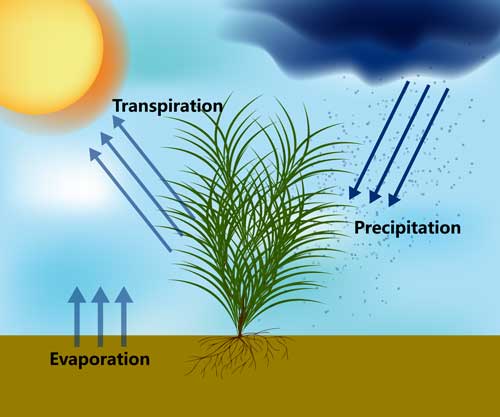
Small Water Cycles
Zoom into local ecosystems and you see that the shape of land together with weather patterns can interact between land and atmosphere. The breathing of plants (evapotranspiration) continually cycles water as an exchange between trees, shrubs, grasses, and the movements of air. Shade and humidity interact to create the conditions that are conducive to life. All of this occurs within the larger processes mentioned above.
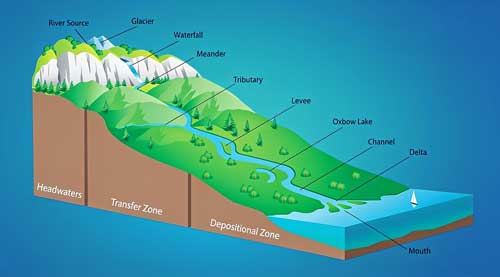
River Systems
About 99% of all the water on Earth is salty, held in the vast reservoir of the World Ocean. A meager 1% is held in aggregate across all the freshwater lakes, groundwater systems, ice sheets, mountain glaciers, and rivers across the planet. These freshwater systems are the arteries of circulation for life on all the continents. Life gathers along their banks – microclimates are much more hospitable to life in these humid areas. Nutrients are continually weathered, eroded, flooded, and distributed as sediments across very large distances. Tributaries work as patchwork quilts of confluences that create the nested fractals of life on land. All of it driven by the flow of rivers.
What we see from the processes described above is that regeneration is always happening – all in flow. It's happening at different scales. Each process influences all the others. The complexities and interdependencies are astonishing. All of this comes together to create and sustain Earth's biosphere. Life – once it emerged several billion years ago – has continually altered and been altered by all of these processes (and more) to keep itself going at the planetary scale.
We have quite a regenerative economy here on Earth!
If you start to feel all the interconnected flows in the living Earth, you can start to understand why regenerative finance can't be reduced to money.
Finance is about anything that meaningfully holds value that can be stored, exchanged, or transformed. This means taking a multicapital view – there are many forms of capital that hold value and can move through a financial system. For example, there needs to be physical capital in the form of land and built structures for a business to function. And there needs to be knowledge capital about how to work with materials and transform them in ways that create value in an economic system. Whole-system wellbeing is about much more than just money.
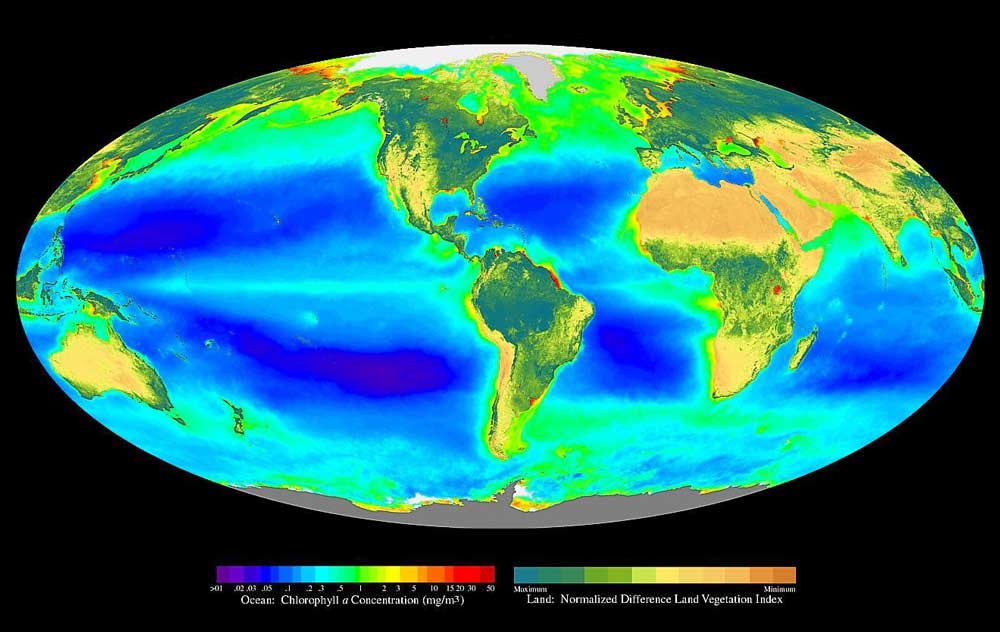
When we talk about regenerative economies and the financial systems that enable flows to occur within them, we need to move away from human-centric thinking so that we can see how economies operate more generally. For example, Earth strives to maintain a balance between the overall amount of incoming and outgoing energy at the top of the atmosphere. This is called Earth's energy budget – associated with profound measures like Net Primary Production, which is the total amount of biomass created by photosynthesis on the planet at any given time. When we move away from human-centric thinking, we see that Net Primary Production is part of the financial system of the Earth: energy arrives from the Sun; chlorophyll in the bodies of plants is able to convert this energy into sugars that build up their bodies; this is converted into animal bodies when the plants are consumed. The food web is actually a financial system that stores, transforms, and exchanges energy in a complex diversity of forms.
If we want to design a regenerative finance system, we'll find the clues about how to do it in the real living processes of the Earth itself.
When we hold this profound truth – that Earth's biosphere is the best example of a regenerative economy available to us – something gets unstuck. We no longer need a "proof of concept" to show that our ideas about regenerative economics are correct.
The burden of proof gets reversed. Now we can critique and dismiss all the approaches to economics that fail to arise from deep ecological knowledge about the evolution of complex systems and systemic wellbeing on a living planet. Instead of basing an economy on political ideologies, the true basis of economics has to be ecology. We can lean into and deeply trust the natural intelligence of Earth for giving us a multi-billion-year track record of case studies about real economic systems.
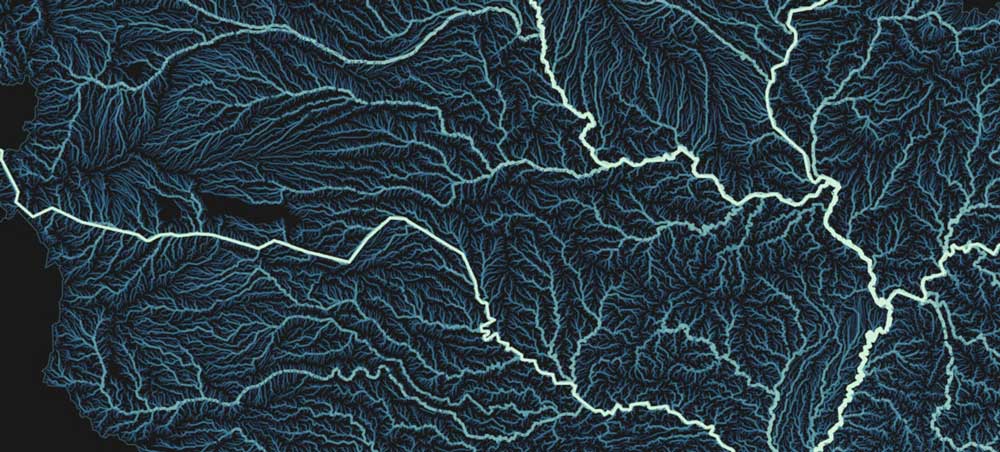
Let's look at the example of major rivers that shape entire continents – like the Mississippi River Basin in North America, the Amazon River Basin in South America, and the Ganges River Basin in the subcontinent of India. Each is a massive system of nested scales. Small streams form high in the mountains. Confluences gather them together into larger streams. Eventually they all join the main branch and flow out into the ocean.
Examine the rivers in more detail and you see that all the Earth System processes mentioned earlier are in play. Radiation from the Sun together with Earth's rotation give rise to weather patterns that bring water and nutrients together in these continuous life-giving flows. Tectonic plates help create the mountains and shape the continents through which the flows emerge. Changes in ocean surface temperatures and movements of jet streams alter how precipitation arrives. In other words, the economic reality of each river is formed, guided, driven, shaped, and constrained by the larger nested scales of the dynamic Earth.


The nested nature of various scales is important. The whole is not created from separate, distinct parts; instead, each smaller part reflects the pattern of the whole. For example, the patterns of blood flow through the veins in our body are reflected in the patterns of water flow in tributaries on the land. We can speak of "eco-holo-fractals." Eco refers to ecology. Holo refers to holonic – simultaneously self-contained and part of larger systems. And fractals are recurring patterns that repeat across different scales. The flow of water swirling into a drain at a small scale resembles the swirling flow of a galaxy. Earth System processes function at a self-contained scale while simultaneously interweaving into a bigger tapestry of life.
All the real economies that exist in this world arise from and are shaped by the dynamics of the Earth. We can only create regenerative economies if we accept this. All attempts to divorce economics from ecology are doomed to fail.
I've been experimenting with regenerative finance since 2020, and have helped create financial flows of several million dollars so far. To continue evolving the work, we've created the Living Flows approach, with the Dandelion Strategy and Ripple Strategy. We're doing all of this on the ground, in the real world – often following the wisdom of the water.
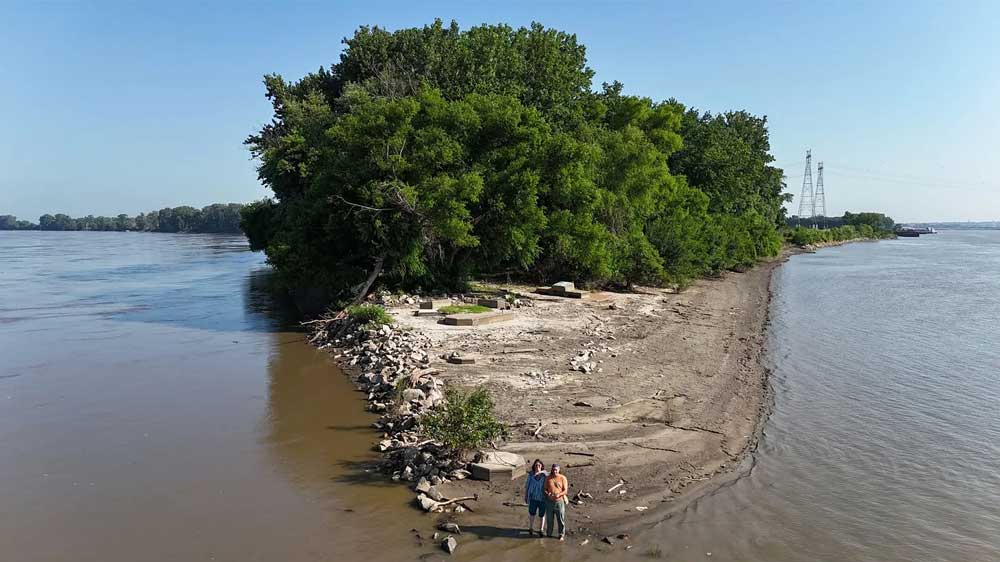
For example, Penny Heiple and I traveled the Mississippi Basin planting living seeds of regeneration for Turtle Island. We are awakening bioregional imagination, since the bioregion is the smallest actionable scale to maintain Whole Earth system integrity. Watersheds are a primary way to identify and organize bioregions (our life places), along with geology, ecology, and human culture/history. Isolated regenerative projects across a given bioregion can be organized to flow into the scale of the bioregion and multiply their effectiveness, while at the same time bioregions around the planet can connect to learn from and with each other (through the Design School for Regenerating Earth) so that action (and regenerative finance) is fractally scale-linked with a goal of regenerating the entire Earth. In designing all of this, you can see we're taking our lead from the patterns of the Earth itself.
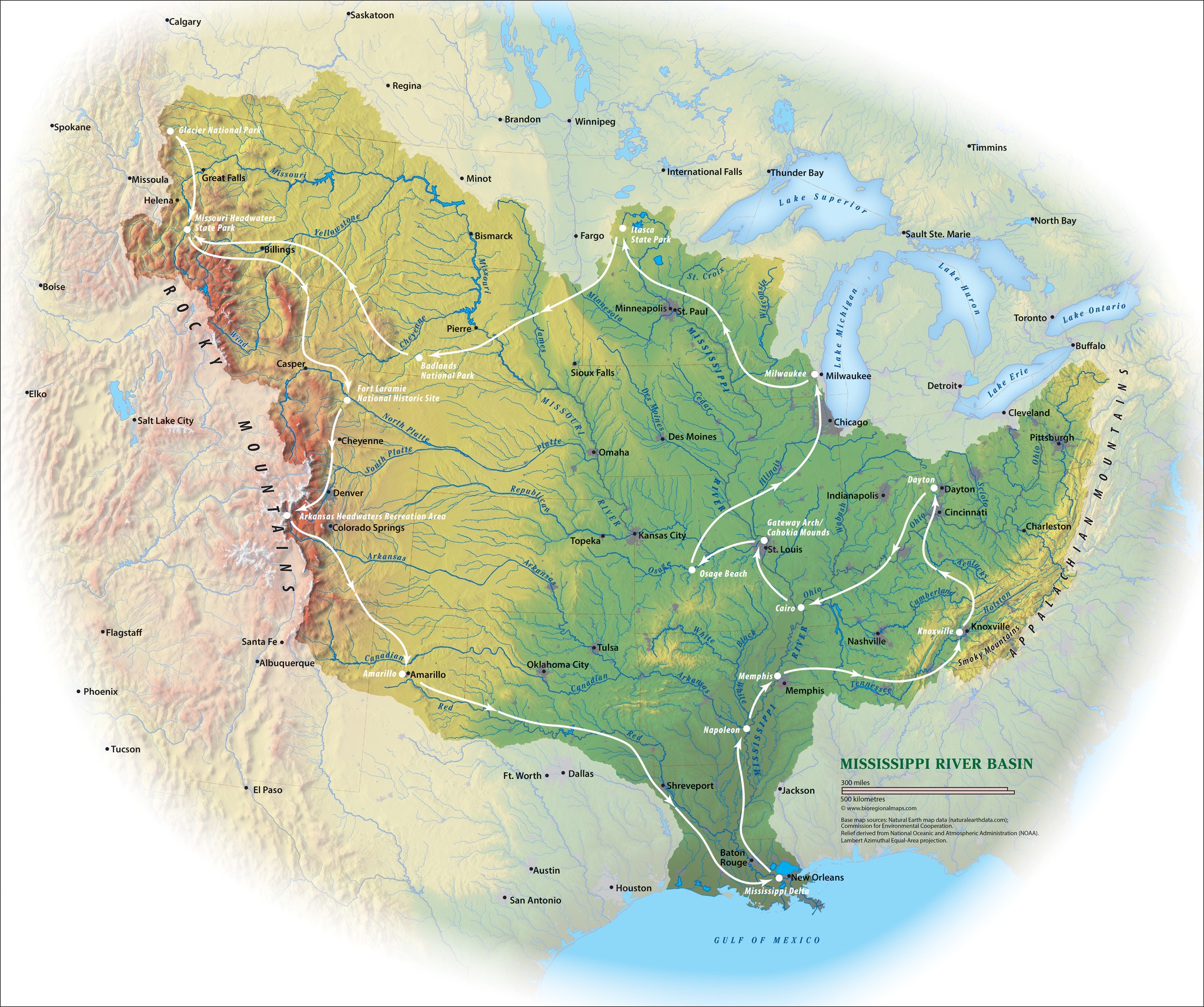
This map shows our journey through the Mississippi Basin. We began and completed our journey at the confluence of two great rivers – where the Missouri and Mississippi become one just north of St. Louis, Missouri. We felt how this site (which is also the launching place of the historic William & Clark Expedition) brings unity and coherence to many landscapes as the waters gather from the Rockies to the west and the lake country in the far north.
Over several weeks, we visited the headwaters and confluences of several rivers. There were the headwaters of the Mississippi, Missouri, Yellowstone, Arkansas, Cimarron, and Tennessee Rivers. Confluences we visited included the meeting of the Minnesota and Mississippi, Missouri and Mississippi, Missouri and Yellowstone, Missouri and Milk, Laramie and North Platte, Cimarron and Canadian, Arkansas and Mississippi. It was amazing to feel all of these connections, with each one being unique.
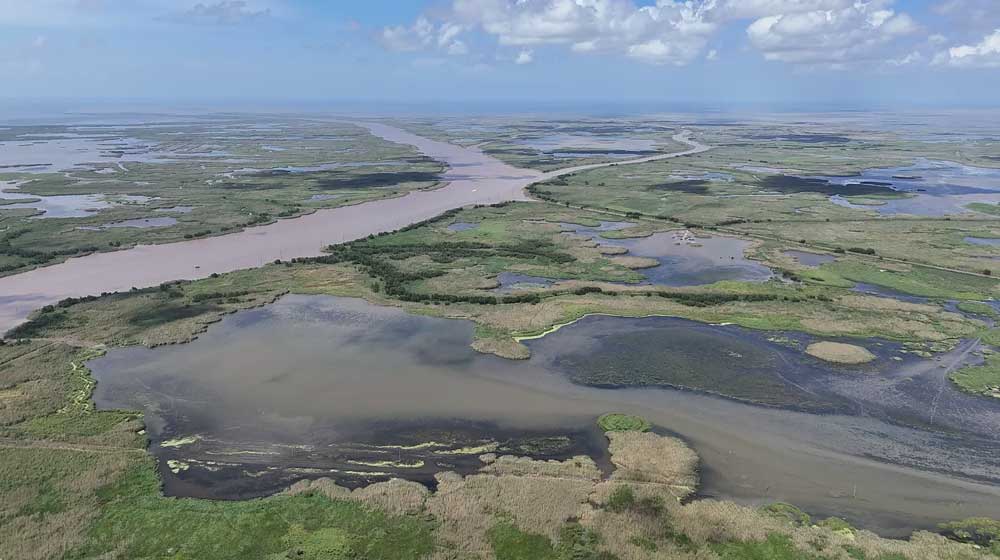
And then there was the delta itself — where all of these waters (and many more) find their way back to the sea. I had to fly our drone high to get any kind of perspective on this vast threading of sediments, marshes, estuary flows, and pooled waters.
It was at the delta that we felt the merging of living flows – a gathering of stories, healing of landscapes, weaving of places, returning to the sea from which all life began. It was spiritual. It was grounding. It was a place of depths that helped us sense what it truly means for Mississippi to be the Ojibwe word for "Father of Waters."
The Mississippi Basin journey brought us into relationship with the land, human culture and history, and local regenerative leaders. It also helped people see themselves and their relationship to their place in new ways. There were many multicapital flows, from the sharing of personal stories to shared meals to mutual learning opportunities.
In the Ozarks (where I grew up), we visited with a bioregional pioneer, David Haenke. The first bioregional congress was held in the Ozarks and the congresses have remained a constant presence in the world since the late 1970s. Inspired by this deep history, during our journey we contributed to gatherings in the Missouri River Valley near Kansas City, along the western shore of Lake Michigan in Milwaukee, in the heartland of Madison, along the front range in Boulder, in the high plains in Amarillo, and up the Ohio River near Dayton. All of these places have local organizers on the ground and the idea of participating in the Dandelion Strategy resonated with them. It offers an opportunity to bring more meaning, context, and reach to their work, weaving it into a larger tapestry of efforts.
Our work isn't just theory. We're grounding in real-world processes of regenerative practice, doing work ourselves in the Northern Andes (Colombia) and with others, like our Bioregional Earth Co-Stewards Susan Bosak and Brian Puppa in the Greater Tkaronto Bioregion (Great Lakes Basin, Canada).
All of this work is shaped and organized by living patterns of the Earth. It's orchestrated and led by the Earth through these organizing patterns. The intelligence is there to be found by anyone who takes the time to look.
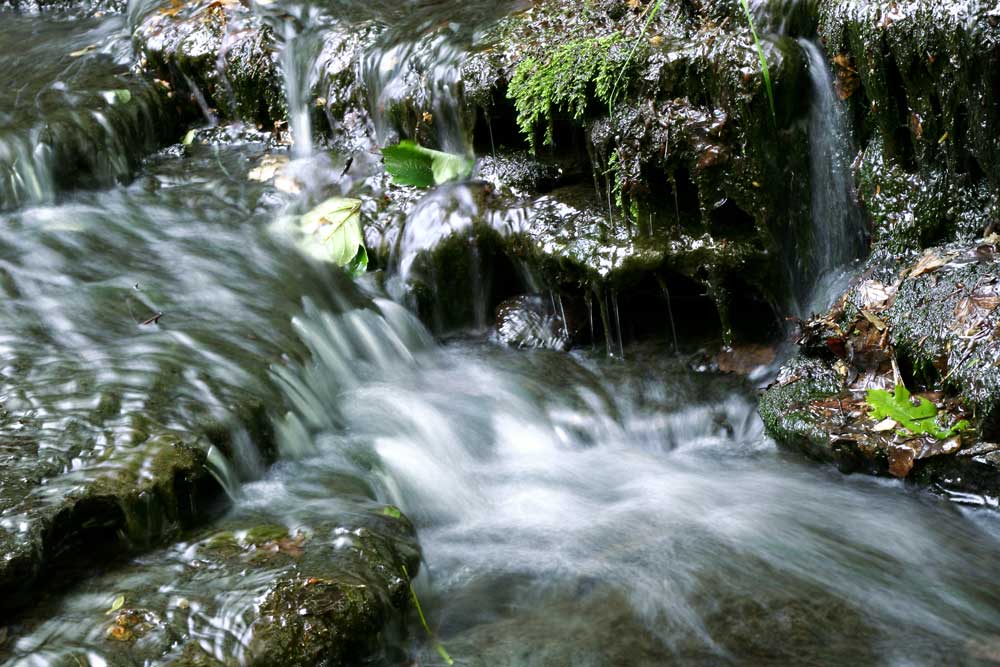
We're creating both the structure and flows required for regenerative finance that can lead to a regenerative economy. In the real world, the structure of the rocks determines the flow of the water, and simultaneously the water can reshape (erode) the rocks. They are in relationship. In the same way, how we organize work on the ground (including the humans doing the work being in right relationship) and flow funding through it are interrelated.
All life on Earth is continually pushing energetic, regenerative flows so that the conditions of life can continue. Life is dynamic, always moving, shifting, changing. Autopoiesis is the technical word – the self-induced ability to continue creating oneself. This is the logic of life. Life does, indeed, find a way.
Humans have to learn how to become fully integrated in the regenerative life flows of our planet if we don't want to go extinct. We need to learn how to do this in contextual ways that are specific to each place. And each place needs to be connected to every other place in some process of mutual learning. This is the emerging story of Bioregional Earth.
It's what I wrote about in my book and what we've been living into being for several years. It's the understanding that has helped us already make tremendous progress in the emergence of a planetary network of bioregions. It's what keeps us going through those dark nights of the soul. This is hard work. It is necessary work. And we know what role we have been called to play. Together, we can create regenerative Living Flows to bring harmony back to the human relationship with Earth.
